Lift your voice and your community!

Auditions for the 2026/27 Season will be held in the evenings of June 22, 23, and August 3 with registration opening in early May.

Chorus members have the following perks:

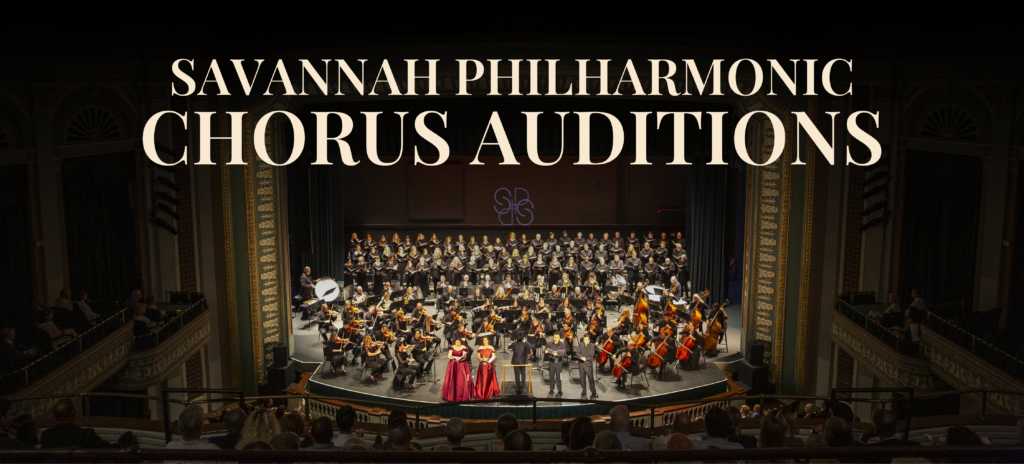
  • Experience the view from the stage at iconic venues like the Lucas Theatre
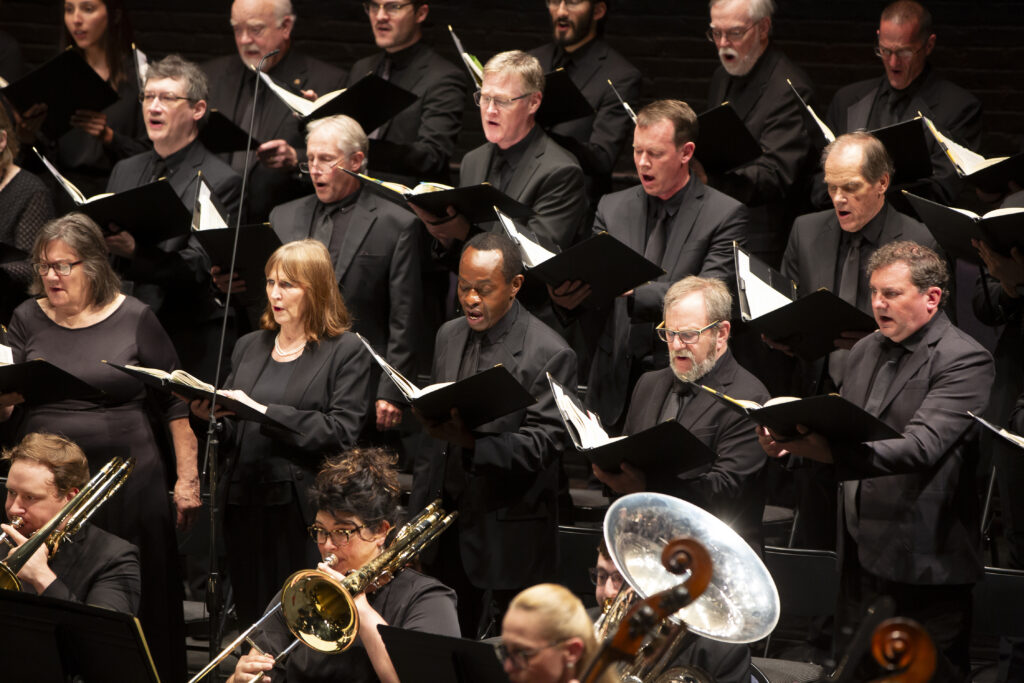
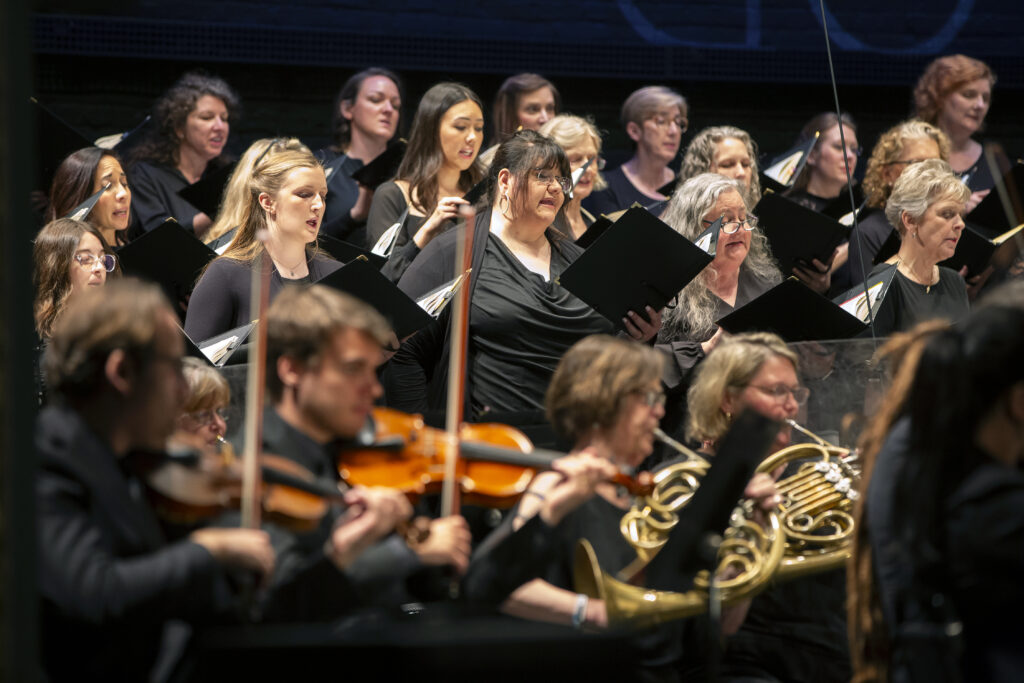
  • Feel the force of a full symphony orchestra as you join together for unforgettable performances
  • Sing with others from throughout the region who join together from a wide range of careers and stages of life to make music
  • Receive private voice lessons from excellent local teachers
  • Get first dibs on Savannah Philharmonic concert tickets and attend special parties just for the chorus

In the 2025-26 Season the chorus is performing Mozart’s Requiem, Vaughan Williams’ Flos campi, as well as concert of famous opera choruses by Verdi, Puccini, and Borodin. Early in the season they had a recording session with composer Jessica French, producing video recordings of Thy Will Be Done and Awake, O Sun.

In the 2026-27 Season the chorus will perform Brahms’ beloved Ein Deutsches Requiem, the Te Deum’s of Dvorak and Haydn, as well as the stunning Orbis by Joe Hisaishi (Studio Ghibli). The trebles of the Savannah Philharmonic Chorus will open the season singing the intricate and mysterious offstage closing of Holst’s magnificent The Planets.

Learn more about the Chorus through our Soundtrack of Savannah podcast in the following episodes:

Those interested are invited to complete a short, 10-minute audition. Auditions entail:

  • Singing a minute or so of a song of your choice, unaccompanied. It could be an art song, aria, hymn, or gospel song, or a folk song/spiritual. 
  • Following your solo, you will be asked to sing vocal exercises to help us determine your range, and then you will be taken through a few exercises that test your ear and musical skills. 
  • Next we’ll hear you sing a prepared short choral excerpt from Handel’s Messiah. Further learning materials for this excerpt will be sent to you upon registration. 
  • We’ll then look at a piece of music and ask you to name several different notations, dynamics, and expression markings.
  • Finally, you will be asked to sight-read a hymn we provide.